
Contact   |   Donate

JOIN THE RESILIENCE

Year-End Giving 2026

JOIN THE RESILIENCE

What does resilience look like in the Eastern Sierra?

It looks like neighbors working side by side to create defensible space, forests with room to grow, and creeks with clean water. Help us raise $15,000 by December 31 to carry this work into 2027.

Campaign Progress
$120 raised of $15,000

Gifts received by midnight, December 31 count toward the goal.

What We Mean by Resilience

The capacity of Eastern Sierra communities and ecosystems to withstand change, recover, adapt, and keep thriving.

Longer fire seasons and ecological stress are pushing this region toward a tipping point. Whitebark develops timely solutions for healthier forests, cleaner watersheds and adaptable communities. That work takes people who care about this place. A gift to Whitebark is a choice to be part of the solution.
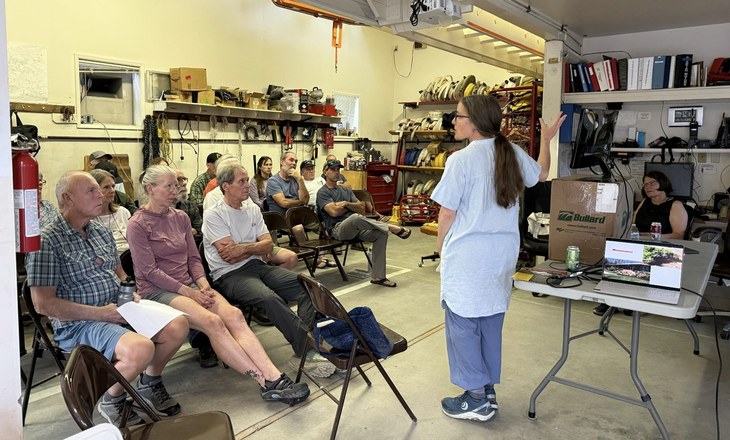
Neighbors at the Junk the Juniper kickoff meeting at the Paradise fire station
Community Resilience

It looks like neighbors working together towards a common goal.

In Paradise, 35 neighbors met at the fire station to learn about juniper. Then they showed up together for a spectacular Junk the Juniper event, removing highly flammable juniper shrubs from properties in the name of fire resiliency. Together they filled four 30-yard dumpsters, funded by a $5,000 Whitebark Institute Community Directed Grant.
$75K
to community-led projects
18
projects funded
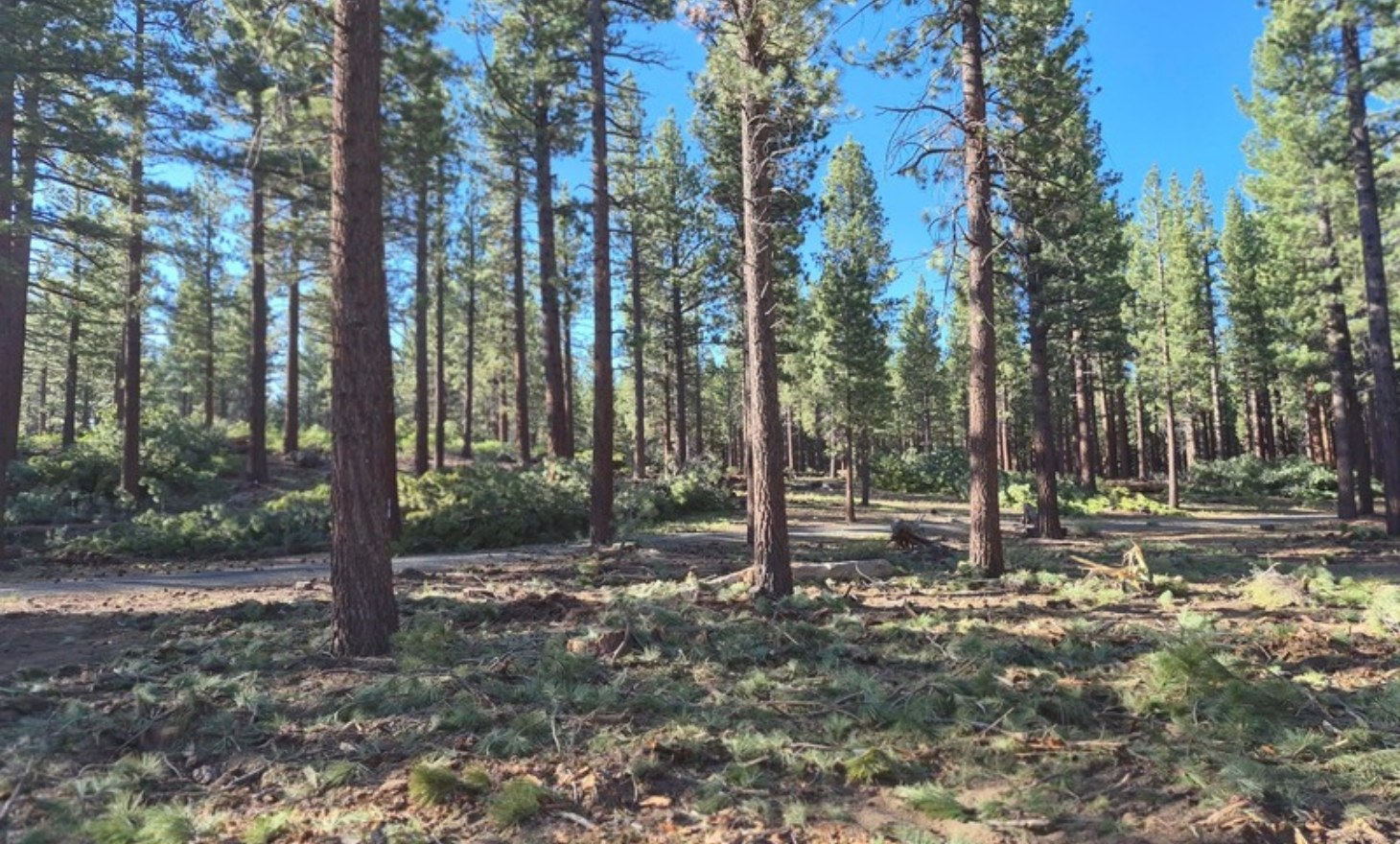
A thinned forest stand at Shady Rest Park with open space between the pines
Wildfire Resilience

It looks like trees with space to grow.

Wildfire doesn’t stop at property lines, so neither does our work. This year’s forest health work at Shady Rest Park proved that Whitebark’s ability to work across jurisdictional boundaries and balance the needs of the community are critical to creating meaningful impacts on the landscape.
40+
truckloads of fuel removed
423
acres treated in the park
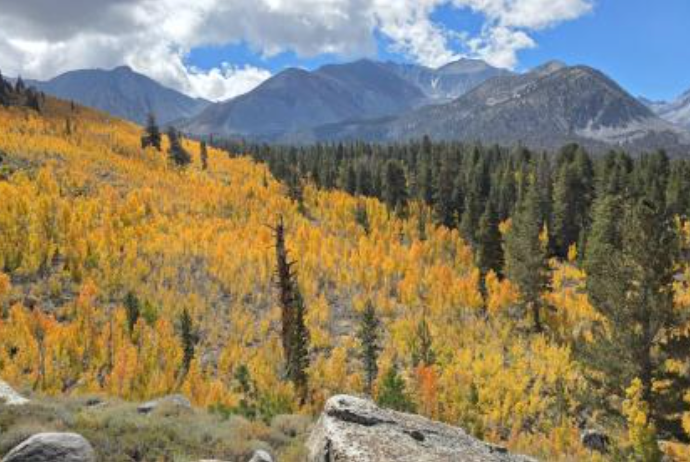
Golden fall aspen below snow-dusted peaks in the Eastern Sierra
Ecosystem Resilience

Ecosystem resilience looks like healthy creeks running through our communities.

The Bishop Riparian Resilience Project plans strategic fuel breaks along riparian corridors addressing watershed health and wildfire mitigation. Whitebark coordinated with CAL FIRE, ESCOG, Inyo-Mono RCD, SCE and LADWP. It is ready for on-the-ground work next year.

~92
acres in and around Bishop
5
partner agencies
Where Your Donations Go

Private gifts fund the work grants and public dollars don’t cover.

Education & Outreach

Workshops, field trips and events that bring the best available science into our communities. Private funding is one of the only ways these programs continue.

Science & Research

Our scientific roots still ground us. Donations help fund research in forestry, watershed health and wildfire resilience.

Collaborative Partnerships

Convening agencies, tribes, towns and residents across jurisdiction lines. That work rarely fits inside a grant budget.

Local Community Projects

Community Directed Grants put resources in the hands of local groups with shovel-ready ideas. Donor funds keep the program going after its final grant year.

Help Us Reach $15,000 by December 31

Be part of what resilience looks like next.

Private donations help us keep these programs going. As a thank you, we’re also offering a sweet sticker pack to any folks that give $25 or more. Be sure to include your address in the comments section of your donation, and we’ll send ’em out.

Whitebark Institute is a 501(c)(3) nonprofit, tax ID 47-1310886. Your gift is tax-deductible as allowed by law.

Community Resilience

Community resilience looks like working side by side with your neighbors

By Saturday morning, July 11, the green waste dumpster in Paradise was almost full. It had been sitting there for four days, and neighbors kept dropping branches in it. Junk the Juniper hadn’t even officially started.

Over that weekend, neighbors filled the equivalent of four 30-yard dumpsters with juniper and other brush from around their homes.

This is what community resilience looks like. Working towards a common goal, together.

What’s the problem with juniper?

Juniper grows in yards and hedges around homes everywhere in the Eastern Sierra. It’s native, so it looks like it belongs. But firefighters call it a “light and flashy” fuel, earning it the nickname “gasoline bush.” Juniper’s resinous sap ignites quickly, and its light, peeling bark can carry embers for miles. In wind-affected corridors, like we have all over the East Side, that combination creates an extremely high-risk fire equation.

Juniper right up against a house is especially risky. But one household clearing its yard doesn’t get you very far if the whole neighborhood has juniper around their homes. It takes a community to address this kind of problem.

A volunteer loading cut juniper into a dumpster below the Eastern Sierra
Juniper cleared from around homes in Paradise.

One yard can’t do it alone

Sierra Paradise Firewise brought neighbors and partners together around one shared problem: overgrown juniper too close to homes.

Whitebark Institute fueled the project by putting resources into the hands of the community. A $5,000 Community Directed Grant helped pay for the arborist, the dumpsters and the flyers. The neighbors made the plan and did the work.

Four dumpsters, one weekend

In June, 35 neighbors met at the fire station to learn from an arborist and a Master Gardener. In July, those neighbors and volunteers turned out for the Junk the Juniper event. With the help of a professional arborist, and the kind of enthusiasm only strong coffee can offer, they filled the equivalent of four 30-yard dumpsters.

After the Pack Fire burned Crowley in 2025, our communities have been hyper-aware of the realities of living with fire. Many communities have successfully developed volunteer Firewise programs, organizing in garages, school cafeterias and churches to coordinate home hardening efforts and build out emergency evacuation plans. These small but mighty community organizations have amazing, ambitious ideas, but are often limited by the lack of resources available.

“Whitebark Institute’s support acted as a force multiplier for our Firewise community’s inaugural event. The grant funding enabled us to rent a green waste dumpster and subsidize arborist services, creating momentum for juniper removal, building enthusiasm for Firewise, and fostering a real sense of accomplishment in our community.”

Lynn Soban, Coordinator, Sierra Paradise Firewise Council
Neighbors at the June kickoff meeting at the fire station learning about high fire risk plants
The June kickoff at the fire station.
Volunteers loading juniper branches into a trailer during Junk the Juniper
Volunteers at Junk the Juniper in July.

Junk the Juniper is one story. The work is everywhere.

Junk the Juniper is one piece of a much larger effort. This year, Whitebark has invested $75,000 in community-led projects across 18 Eastern Sierra communities. Each one is planned, led and pulled off by local residents.

The Community Directed Grant Program has historically been made possible through generous funding from Southern California Edison.

Help carry this work into 2027

Resilience is built over years, through planning, partners and people who keep showing up. This season, we’re raising $15,000 by December 31 to keep the work moving into 2027.

Will you give $100 today? A gift of $100 helps us say yes to the next neighborhood that wants to get started, and it moves us toward our goal of $15,000 by the end of the year.

Community resilience looks like neighbors who show up. Be part of making it possible.

Donate
Ecosystem Resilience
Fall landscape in an aspen riparian corridor

Ecosystem resilience looks like healthy creeks running through our communities

In Bishop, water is never far away. It runs through creeks and ditches behind homes on Mumy Lane, along Underwood Lane and Reata Road, and past the picnic tables at People’s Park. Wherever water flows, green follows: towering cottonwoods, native willows, wild rose, and thick stands of rushes and sedges.

Ask anyone who has taken an after-work swim at Artesian Wells or spent an afternoon fly-fishing the upper Owens River: our connection to this water runs deep.

These green ribbons are among the richest habitat in the Owens Valley. The valley’s waterways are home to birds, wildlife and native fish found nowhere else, including the endangered Owens pupfish and the Owens speckled dace. And this habitat isn’t tucked away in remote places. It runs straight through town.

Aerial view of Bishop with green riparian corridors running through town toward the Sierra
Riparian corridors run right through Bishop and the neighborhoods around it.

Where fire and water meet

Riparian corridors are the lush strips of plant life along streams. They feed and shelter wildlife and keep creeks shaded and cool. Seasonal floods once reshaped streambanks and cleared out old growth. Today, with water diversions and managed channels, many of these waterways run through neighborhoods without that natural reset.

Dead wood and dense brush build up along the banks. Eastern Sierra wind, slopes and dry summers can then carry fire along these corridors like a fuse. Fire managers call it riparian wicking. In Bishop, that fuse runs past homes, local businesses, roads and power lines.

Fall aspen and willows lining a rocky Eastern Sierra creek
Healthy riparian corridors are some of the richest habitat in the Eastern Sierra.

The gap in fuel work

For years, fuel reduction crews worked around riparian areas instead of in them. Working near water means sensitive habitat, layers of permitting and careful methods, and many corridors cross land owned by different agencies and utilities. So the corridors were left out, and the fuel kept building.

Whitebark’s planning team calls it the treatment gap. The Bishop Riparian Resilience Project is designed to close it, and both the Inyo and Mono County Community Wildfire Protection Plans name riparian fuel work as a top priority.

Five partners at one table

A single creek in Bishop can pass through land owned by a water utility, under a power line and beside a county road, all within a few blocks. No one agency could plan this work alone. This year, Whitebark brought five partners together around the same map:

  • Los Angeles Department of Water and Power (LADWP), owner of the riparian corridors where the work will happen
  • CAL FIRE, the state’s fire agency
  • Eastern Sierra Council of Governments (ESCOG), the regional partnership of local governments
  • Inyo-Mono Resource Conservation District
  • Southern California Edison, the utility running power lines through the area

92 acres, planned with water in mind

The project covers 92 acres of riparian corridor and roadside in and around Bishop, along Mumy Lane, Reata Road, Underwood Lane and South 3rd Street, and at People’s Park. The goal is strategic fuel breaks that slow fire down while keeping the watershed working.

Map of the Bishop Riparian Resilience Project treatment areas, shown in blue, west of and within the City of Bishop
Bishop project areas, shown in blue. Map from the Riparian Resilience StoryMap.

Every rule in the plan is built around the creek:

  • Hand crews near waterPeople, not machines, clear dead wood and non-native ladder fuels in sensitive areas.
  • Equipment buffersNo machinery within 100 feet of flowing streams, or 50 feet of seasonal ones.
  • Canopy staysAt least 75% of native trees and 50% of native understory are kept within 100 feet of streams.
  • Channels untouchedNo material is removed from the stream channels themselves.
  • Clean burningChips are spread no more than 2 inches deep on average, and any pile burning happens away from water under an approved smoke plan.

The result: corridors that still shade the water and shelter wildlife, with far less fuel to carry a fire into town.

A hand crew sawyer carrying a chainsaw through a forest
Hand crews, not heavy equipment, do the work closest to the water.

Bishop is the biggest of five

Bishop is the biggest piece of a larger riparian effort across Inyo and Mono Counties. Working with the Eastern Sierra Wildfire Alliance, ESCOG, the Fort Independence Tribe, CAL FIRE, Mono County and the Riparian Resilience Working Group, Whitebark has five riparian projects planned on about 258 acres:

  • Bishop, 92 acres along town corridors
  • Walker, 66 acres along the West Walker River
  • Sierra Nevada Aquatic Research Laboratory, 35 acres along Convict Creek
  • Fort Independence, 33 acres along water diversions from Oak Creek
  • Sunny Slopes, 32 acres along Rock Creek and Lower Rock Creek
Dense riparian trees along Oak Creek on the Fort Independence Reservation below the Sierra
The Fort Independence project area along Oak Creek, one of the five planned riparian projects.

Each one uses the same careful approach. Together they give the Eastern Sierra a working model for fuel work along its creeks and rivers.

Read about all five projects Explore the interactive map

Help move Bishop from planning to doing

Plans like this take years of coordination before a single crew shows up. Grants rarely pay for that scale of collaboration. Private gifts do.

This season, we’re raising $15,000 by December 31 to carry this work into 2027. A gift of $5, $25, $100 or $500 helps keep partners at the table and the next riparian project moving.

Resilience looks like healthy creeks running through our communities.

Donate

Form not showing? Give on our secure donation page.