
The impact bark beetles leave on the landscape is far greater than their size would suggest. No larger than a grain of rice, these tiny insects are a major cause of widespread tree mortality across the Sierra Nevada and the State.
Though bark beetle outbreaks surged dramatically in the past decade, these insects are native to California and have long been part of the Sierra Nevada ecosystem. In healthy forests, they typically only affect the weakest trees. Strong, well-hydrated trees can defend themselves by producing pitch that pushes invading beetles out.
However, dense forests where trees compete for limited water, nutrients, and sunlight are especially susceptible. Following the drought that peaked in 2015, many stands were unable to produce enough pitch to fend off the beetles, resulting in widespread die-off across the landscape.
Strength in Numbers

The forest is filled with “invisible” chemical signals called pheromones that beetles use to communicate. When a bark beetle attacks a tree, it releases pheromones to attract other beetles to the site. These mass attacks help the beetles overwhelm the tree’s natural defenses. Once the tree is fully occupied, the beetles emit a different pheromone to signal that the tree is “full” and it’s time to move on to a new host.
In fire-suppressed landscapes, where densely packed, small diameter trees dominate, forests are especially vulnerable due to competition for resources. Not only are stressed trees more susceptible to infestations, but heightened forest density facilitates the spread of bark beetle in fascinating ways.
In more open forests, these pheromone signals are more easily dissipated by wind. In contrast, dense stands trap these chemical cues, intensifying their effect and drawing in more beetles to the stand. These conditions allow beetle populations to flourish. Infestations can easily proliferate in dense stands, where close proximity between neighboring trees facilitates the spread from one host to another. At first, they target mid-sized trees, but as infestations intensify, even mature trees become vulnerable.
How Beetles Attack and What We Can Do
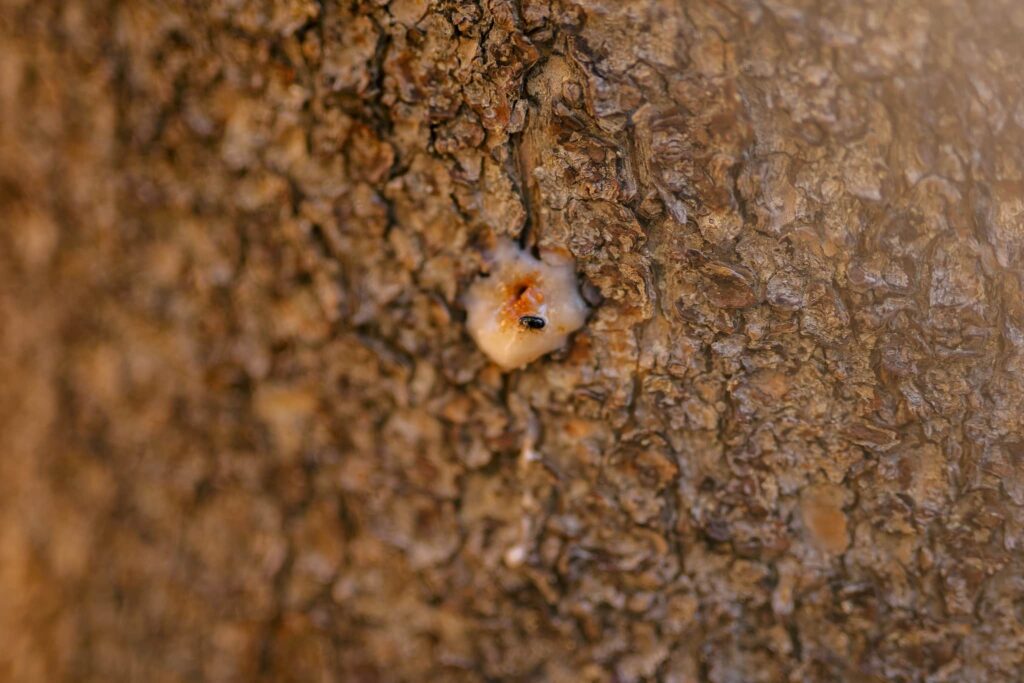
Bark beetles tunnel into the inner bark of trees, where they lay their eggs and feed, disrupting the flow of nutrients and water in the attacked tree. The tree fights back by producing pitch, often mixed with “frass” (bug poop), which has a similar appearance to sawdust. Small exit holes on the bark and glops of pitch on the trunk are clear signs of an active infestation.
As the beetles feed, trees begin to decline in health. Symptoms include “flagging”, where the tips of branches discolor and die. Ultimately, trees that succumb to the beetles will have discolored needles that eventually shed from the tree.
Eggs within the bark hatch into larvae and eventually emerge as adults. Most commonly, adults emerge in late spring and again in late summer and early fall. Occasionally, beetles will remain and reinfest the same tree, but most commonly they move on to others once they emerge.
This life cycle creates a logistical challenge for land managers. Fuels reduction and ecological thinning are typically scheduled for late summer and early fall, just as beetles are emerging. Since this timing cannot always be avoided, it’s important that any infested trees cut during this window are removed from the area as quickly as possible. Otherwise, emerging beetles can spread to nearby healthy trees and increase infestation.

On a small scale, the beetle’s chemical strategy can be harnessed against them. SPLAT Verb is a formula that employs the same pheromone that the beetles use to signal that a tree has reached full occupancy. It’s a slow release, synthetic formula, effective for 8-20 weeks at repelling would-be invaders. It’s environmentally friendly and effective, but too impractical and expensive for widespread use. While it won’t be able to defend the entire forest from beetle mortality, it can be a useful tool to protect specific trees.
Eastern Sierra Impacts
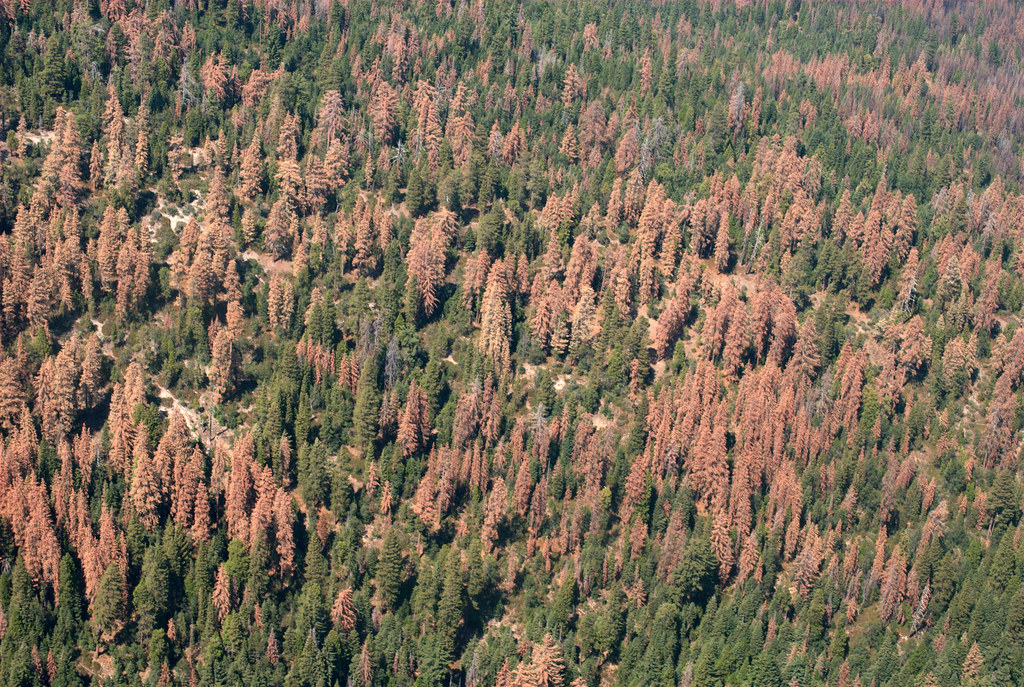
Across the Eastern Sierra, bark beetle outbreaks have caused widespread tree mortality. While bark beetles have always played a role in the region’s forest ecology, the scale and intensity of recent outbreaks signals that the forest is out of balance. Rising temperatures and prolonged drought have intensified tree stress and increased vulnerability to beetle attacks.
In response, ecological thinning efforts are underway to address both the symptoms and the cause of beetle driven die-off.
Thinning operations serve two key purposes:
1. Remove infested and dead trees that contribute to wildfire risk and fuel buildup.
2. Reduce overcrowding caused by fire suppression to lower competition for water and nutrients, helping remaining trees regain their natural defenses.
Beyond thinning, we’ve also used SPLAT Verb applications at the Mammoth Creek Parcel to protect some of the healthy trees remaining after the majority of infested trees were removed. If you take a stroll through the Parcel, you can see evidence of these treatments, which appear as gray-brown sticky globs applied to the trunks of trees. Parcels like this, which are small and located within town, are perfect locations to try out these treatments.
Bark beetles might be small, but they remain a major factor that influences how, why, and when we do our work. Through ecological thinning and careful planning, we’re on our way to restoring healthier, more resilient Eastside forests.