
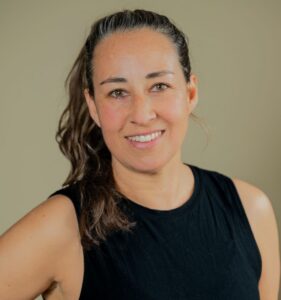
Outreach & Education Coordinator
Heidi is a bilingual conservation professional from Mexico with expertise in marine resource management and outdoor education. Living in the Eastern Sierra since 2020, she is the Outreach and Education Coordinator at the Whitebark Institute, focusing on community engagement. In her free time, Heidi enjoys exploring the Sierra Nevada’s natural beauty.
On October 10, 2026, residents from Lee Vining, June Lake, Twin Lakes, Mono City, Big Pine, and beyond gathered at the Lee Vining Community Center for the West Mono Basin Wildfire Resilience Workshop. Hosted by Whitebark Institute with support from our project partners, the workshop connected community members with local and regional fire experts for an honest conversation about wildfire risk in the Mono Basin and the practical steps we can take, at home and together, to prepare for it.
Thank you to everyone who came out, asked questions, and shared your experiences. Here’s a look at what we covered and what we heard.
Session One: Wildfire in the Mono Basin
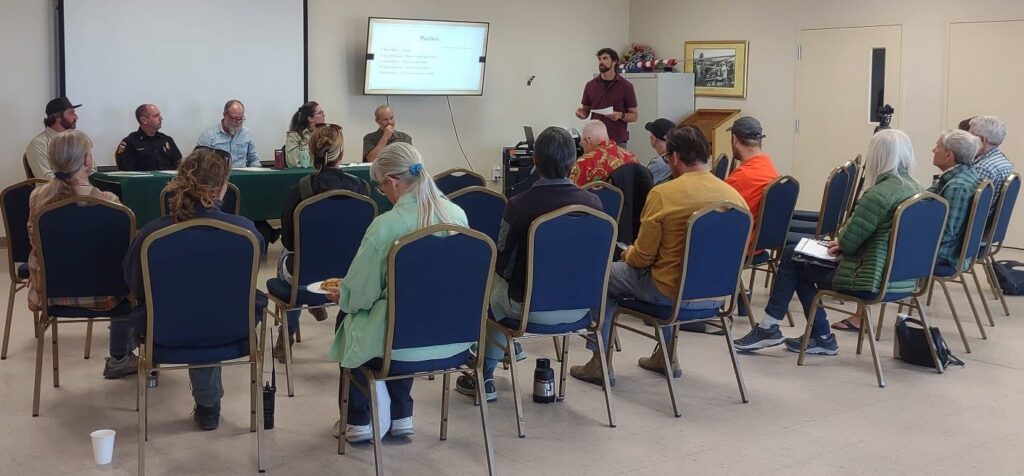
Eric Vane, senior environmental planner with Whitebark Institute and a former Forest Service forester, opened the day with a look at how fire has shaped Eastern Sierra landscapes. Historical photos from Bowler, Bloody, and Lee Vining Canyons show forests growing denser and conifers spreading into meadows and sagebrush flats over the past century. Early accounts describe more open forests of fire-resistant pines, shaped by frequent, mostly low-severity fires. Yet recorded fire history shows that less than 10% of the roughly 700,000-acre Mono Basin watershed has burned over the past century, far less than historical fire-return intervals would suggest.
A panel of five experts then shared what they’re seeing on the ground:
- Alex Teitelbaum, U.S. Forest Service Fuels Specialist, Inyo National Forest
- David Haas, CAL FIRE Unit Forester
- Paul McFarland, Mono County Supervisor, District 3, and Lee Vining Volunteer Fire Department captain
- Kirstie Butler, U.S. Forest Service Fire Prevention Technician, Mono Lake Ranger District
- Jeff Hinson, retired U.S. Forest Service Fire Management Officer
A few themes came up again and again. Cheatgrass is spreading quickly, filling the gaps between shrubs with continuous fuel that can carry fire fast, even in relatively calm conditions, and crowding out native plants after a fire. Longer intervals without fire have led to heavier fuel loads, denser conifer stands, and rising tree mortality. Weather and fire seasons are less predictable than they used to be, and more people on the landscape means more chances for human-caused ignitions. On the positive side, panelists noted that interagency coordination and firefighting response have improved noticeably over the past decade or so.
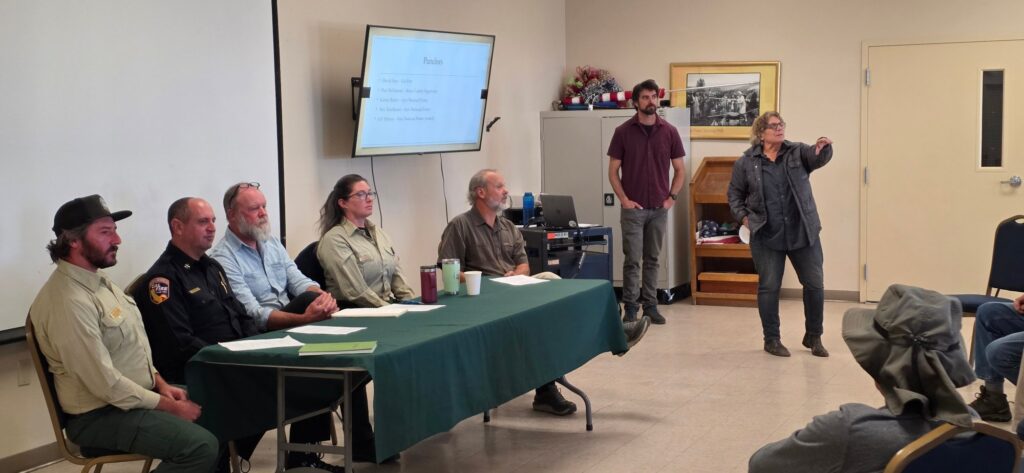
Audience questions sparked lively conversations about managing cheatgrass after fire, restoring riparian areas and aspen stands, and how changes to the federal Roadless Rule could affect both fire access and ignition risk. Key takeaways from the panel included:
- Invest in the long game. Sustained funding for restoration, invasive species control, and proactive fuels reduction can lower future wildfire risk and response costs.
- Work across boundaries. Wildfire doesn’t stop at property lines, so partnerships among agencies, organizations, and landowners, including LADWP, are essential.
- Let science guide restoration. Conifer removal, aspen and meadow restoration, and prescribed fire are showing promising results, and continued monitoring will help guide future work.
Session Two: Home Hardening & Defensible Space
The afternoon shifted from the landscape to our own backyards. Kristen Pfeiler of the Eastern Sierra Council of Governments introduced the Eastern Sierra Community Wildfire Defense Project, a five-year, $4.5 million initiative funded by the U.S. Forest Service. The project connects three essential pieces of wildfire mitigation: education (do residents know what to do?), implementation (do they have the resources to do it?), and fuel removal and utilization (can the resulting vegetation be removed and put to good use?). Plans include quarterly education events, tailored home assessments piloted with CAL FIRE, support for Fire Safe Councils and Firewise Communities, and new community cleanup equipment and composting programs. The project will also invest roughly $1 million in local workforce development, partnering with Tribal fire programs and Cerro Coso Community College.
Wendi Grasseschi, Mono County Wildfire Mitigation Coordinator, then led a hands-on look at home hardening. Wildfire reaches homes in three main ways: radiant heat, direct flame contact, and windblown embers. Embers are often the biggest threat, but small, targeted actions can make a real difference. For a full checklist, see CAL FIRE’s guide to hardening your home.
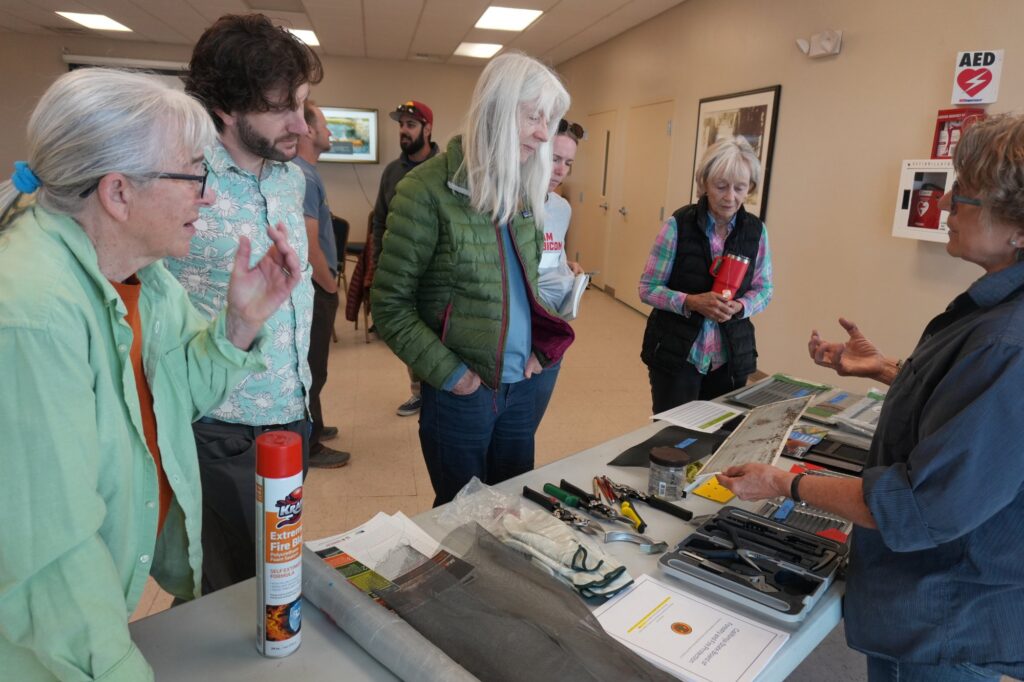
- Upgrade your vents. Use vent mesh with openings of 1/8 inch or smaller. It’s a high-priority, relatively low-cost fix. Clean screens regularly so lint and debris don’t build up.
- Clear what collects. Pine needles, leaves, and other debris under decks and stairs and around foundations are prime spots for embers to land and ignite.
- Focus on the first five feet. Move firewood away from the house when you can, and prioritize the section of fence attached to your home rather than replacing the whole thing.
- Remove ladder fuels. Break up vegetation that lets fire climb from the ground into shrubs and tree canopies.
- Don’t strip the lot bare. Clearing too aggressively can invite cheatgrass back in. Thoughtful landscaping can be both attractive and fire-wise.
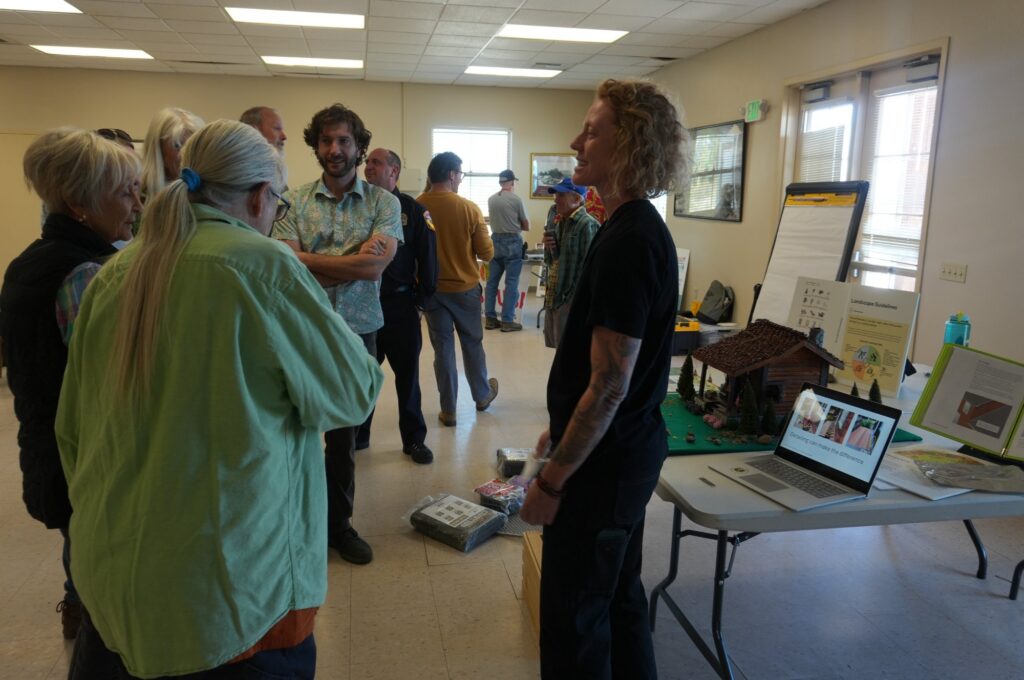
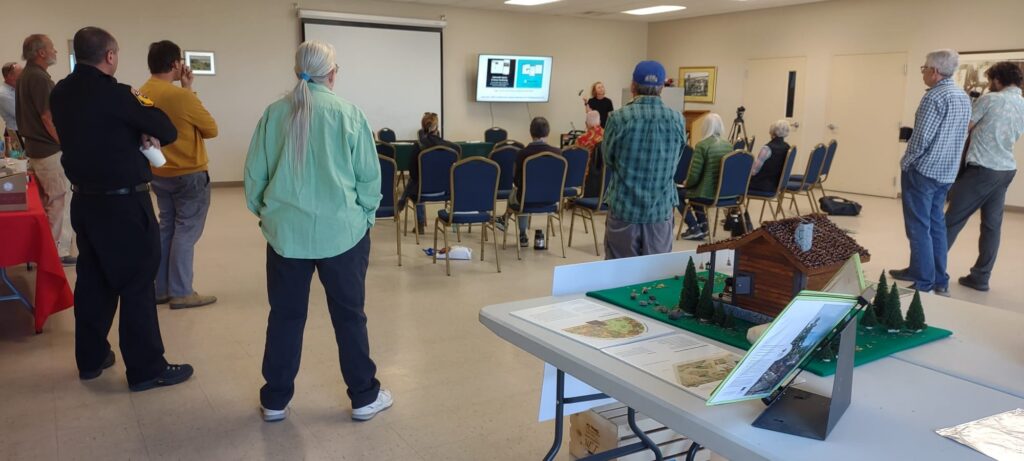
Gathered around a scale-model defensible space display, participants shared what they need most: clear, affordable, property-specific guidance rather than more general rules. Residents asked about windows, vents, and decks, raised concerns about finding contractors who understand wildfire-resistant building, and wanted help knowing which improvements to tackle first. The discussion came back to two goals: make your home less likely to ignite, and make it easier for firefighters to defend. Ideas like a vetted local contractor list and one-on-one home assessments drew strong support, and we’re taking that feedback to heart.
Building Resilience Together
Wildfire resilience starts with understanding how fire spreads and focusing on what’s within our control. But one home’s improvements can only go so far. Lasting progress takes neighbors, local crews, agencies, Tribal partners, educational institutions, and whole communities working together. The goal isn’t just to protect individual homes, but to build safer, more resilient communities across the Eastern Sierra.
A huge thank you to our panelists, presenters, partners, and every resident who joined us. Stay tuned for video from the workshop, coming soon!
This project was made possible through support provided by USDA Forest Service and The Nature Conservancy, under the terms of the WRLC Agreement #25-CA-11132543-057, through a subaward to the Watershed Research and Training Center. The content and opinions expressed herein are those of the author(s) and do not necessarily reflect the position or the policy of such agency. The Nature Conservancy, or WRTC, and no official endorsement should be inferred.
This institution is an equal opportunity provider.
Stay in the Loop
Join our email list to get updates on our work fostering resilience across the region and learn how you can get involved.